Tissue Sarees by Moolchand Mill
What Is a Tissue Saree?
A tissue saree is light, shiny, and surprisingly easy to wear for hours. It doesn't have the weight of traditional silk, but it still looks dressy enough for occasions where you want to make an effort without feeling weighed down.
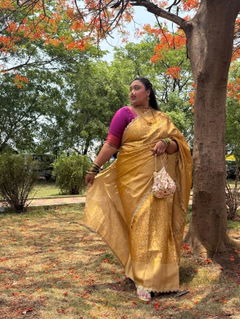
The shine comes from the way it's made. Silk threads are woven with metallic yarn (usually gold or silver toned), creating a soft sheen that catches light without looking flashy. The fabric has a slight crispness to it, so it holds pleats well and drapes cleanly.
At Moolchand Mill, we focus on tissue sarees that balance that subtle shine with wearable designs. Whether you're shopping for a festive event or browsing silk sarees online, these are built to be easy to carry and style.
What Makes Tissue Sarees Different
The construction is what sets tissue sarees apart. Instead of pure silk, the fabric blends silk with metallic threads. That combination changes everything: the weight, the texture, the way light hits it.
Here's what you get:
- Lightweight – Easier to carry than full silk
- Soft sheen – Not heavy shine, just a glow
- Slightly crisp texture – Holds pleats without being stiff
- More structured – Drapes cleanly, doesn't cling
A tissue silk saree sits somewhere between traditional silk and lighter festive fabrics. You get the richness without the bulk.
Tissue Silk vs Regular Silk Saree
People often ask how tissue silk is different from regular silk. Here's the breakdown:
Regular silk saree:
- Made entirely from silk yarn
- Feels softer and heavier
- Has a matte or deep sheen depending on the weave
- Drapes with a soft fall
Tissue silk saree:
- Blends silk with metallic threads
- Lighter weight, slightly crisp
- Shine comes from metallic yarn, not just silk
- Reflects more light, looks dressier
Both are silk sarees, but the finish and feel are completely different.
How Tissue Sarees Are Made
A tissue saree is woven by combining fine silk yarn with metallic threads. The metallic thread isn't added later or printed on top. It's interwoven during the weaving process, which is why the shine is even across the entire fabric.
Some tissue sarees have more metallic thread, which makes them glossier. Others use more silk, giving a softer, more subtle finish. That balance between silk and metallic yarn is what defines the final look.
Tissue Silk vs "Jimmy Choo" Fabric (And Why It Matters)
This is where buyers get confused, especially when shopping online.
"Jimmy Choo" fabric sarees are usually synthetic (polyester or blended fibers). They're designed to mimic the shine of tissue silk but are made very differently.
Here's how to tell them apart:
Tissue silk saree:
- Natural, slightly muted sheen
- Lightly crisp but breathable
- Shine comes from woven metallic threads
- Structured, elegant drape
Synthetic "Jimmy Choo" fabric:
- Overly glossy, almost plastic-like shine
- Feels slippery or stiff
- Shine is a surface finish, not woven
- Either too flowy or unnaturally rigid
If you want something with traditional value and durability, tissue silk is a completely different category from these synthetic alternatives.
Colours and Designs in Tissue Sarees
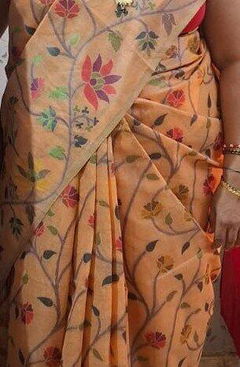
Tissue sarees are usually designed to let the fabric shine, not heavy embellishments.
Common colours:
- Gold, beige, champagne
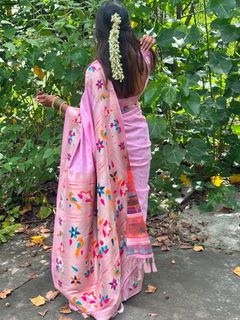
- Pastels like pink, peach, mint
- Rich tones like wine, green, navy
Designs are minimal:
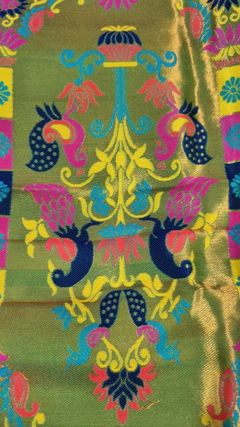
- Light zari borders
- Subtle woven textures
- Small motifs instead of heavy work
This keeps the saree elegant and easy to style without overwhelming the look.
When to Wear a Tissue Saree
Tissue sarees work for occasions where you want to look polished without wearing something heavy.
Good for:
- Day functions
- Festive occasions
- Pre-wedding events
- Small gatherings and dinners
It's the right choice when you want something lighter than traditional silk but still dressy enough to hold up at formal events.
Tissue Saree Pricing (What You're Paying For)
Tissue saree prices vary based on fabric quality, weaving, and detailing.
Entry-level: ₹800 to ₹2,000 (lightweight, basic designs)
Mid-range: ₹3,000 to ₹10,000 (better fabric, cleaner finish)
Premium handwoven tissue silk: ₹10,000 to ₹25,000+ (pure materials, intricate weaving)
At Moolchand Mill, we offer options across price points while keeping fabric quality consistent. The goal isn't just variety. It's making sure you're not compromising on material whether you're spending ₹1,000 or ₹20,000.
How to Care for Tissue Sarees
Tissue sarees need a bit of care because of the metallic threads.
- Dry clean after use – Don't risk washing at home
- Store in cotton or muslin cloth – Not plastic, which traps moisture
- Avoid folding in the same spot repeatedly – Prevents permanent creases
- Keep away from moisture – Protects both silk and metallic threads
Proper care keeps the shine and structure intact for years.
Buying Tissue Sarees Online
If you're shopping for tissue sarees online, focus on fabric clarity and finish. The look depends heavily on the weave, so knowing what you're buying matters.
What to check:
- Fabric composition – Is it silk blend or synthetic?
- Weaving details – Is the metallic thread woven or just printed?
- Photos – Zoom in on texture and shine
- Return policy – Important when buying higher-value sarees
At Moolchand Mill, product pages include clear fabric breakdowns and detailed photos so you know exactly what you're getting.