Maharashtrian Sarees
Ask anyone from Maharashtra what a saree means to them, and the answer rarely stops at "clothing." It's what gets pulled out for Gudi Padwa, what a bride wears with her mother's jewellery, what shows up at every wedding and every haldi and every Ganpati visarjan for as long as anyone can remember. The state's weaving traditions run deep, and that shows in how many distinct styles have survived: each one tied to a region, an occasion, or a specific kind of celebration.
Moolchand Mill's Maharashtrian saree collection brings these traditions together in one place: Paithani sarees, Narayan Peth sarees, Khan sarees, Peshwai sarees, silk sarees, Nauvari sarees, readymade Nauvari sarees, Kathpadar sarees, semi Paithani sarees, and bridal sarees. Some of these you'll recognise instantly. Others might be new if you didn't grow up around them, but every one has its own story and its own reason for still being worn today.
Where These Sarees Come From
Maharashtra's saree heritage isn't one tradition. It's dozens layered on top of each other, shaped by region, community, and centuries of weaving skill. Paithan and Yeola gave the world the Paithani. The nine-yard Nauvari drape became the saree you'd see at a Maharashtrian wedding or during Lavani performances. Somewhere in between sit sarees like the Narayan Peth and Kathpadar, less talked about outside the state but just as woven into everyday and festive life.
What ties them together is range. A Paithani gets passed down as a family heirloom. A Nauvari gets worn to a wedding and then again to Ganpati celebrations the same year. Others, like the Khan saree, work just as well for a Tuesday as they do for a function. That's the versatility people keep coming back for.
Paithani Sarees
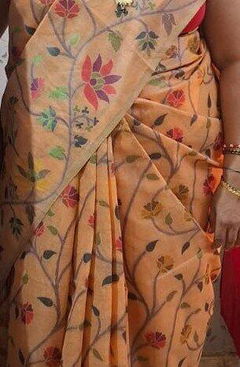
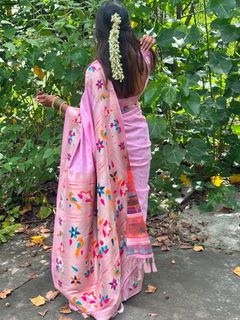
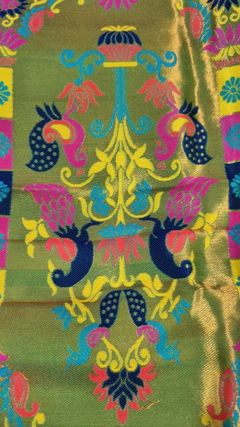
The Paithani doesn't really need an introduction if you're from Maharashtra, but here's the short version: it's known for bold colours, heavy zari borders, and motifs, peacocks, lotuses, vines, that have stayed almost unchanged for generations. It's the saree most families still consider the gold standard for weddings and other big occasions, often bought once and kept for decades.
If a full Paithani feels like too much for the occasion, a semi Paithani saree gives you the same design language in a lighter, more everyday-friendly weave. Good for festive get-togethers where you want the look without the weight.
Narayan Peth Sarees
Narayan Peth sarees stand out for their temple-border patterns and bright colour pairings, woven light enough to wear all day. They show up often at religious functions and festivals, but plenty of women also wear them to work simply because they're comfortable and still look put together. Simple, but not plain.
Silk Sarees
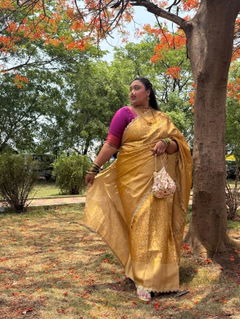
There's a reason silk sarees never really go out of rotation. The drape, the texture, the way they photograph, all of it makes silk the default pick for weddings, receptions, and religious ceremonies across generations. Whether you go for a heavily worked traditional design or something more minimal, silk carries both without trying too hard.
Khan Sarees
Khan sarees don't get talked about as much as Paithani or Nauvari, but they deserve more attention. The woven patterns are distinctive, the finish is elegant, and the fabric is genuinely comfortable, which is why they work equally well for a festival and for a regular day out.
Nauvari Sarees
The Nauvari is unmistakable. Draped in the traditional nine-yard style, it's built for movement, which is exactly why it's the saree of choice for weddings, Lavani, and other performances where the drape needs to hold up. There's a reason it's still considered one of the most recognisable symbols of Maharashtrian identity.
Readymade Nauvari Sarees
Not everyone has the time, or frankly the patience, to drape a nine-yard saree from scratch. That's where the readymade Nauvari saree comes in: same traditional look, pre-stitched for a quicker, easier wear. It's become a go-to for first-timers, dance performances, and anyone who wants the Nauvari silhouette without the styling learning curve.
Peshwai Sarees
Peshwai sarees draw from the Peshwa era, and it shows in the detailing, rich colours, intricate borders, a distinctly regal finish. They're built for occasions that call for something grand: weddings, festive functions, cultural events where you want the outfit to carry some weight.
Kathpadar Sarees
Kathpadar sarees are the quieter option on this list, known for contrast borders and understated styling rather than heavy embellishment. That restraint is exactly the appeal. They're a favourite for religious ceremonies and family functions where classic Maharashtrian styling matters more than standing out.
Bridal Sarees
For a lot of Maharashtrian brides, the saree isn't just an outfit, it's the one piece from the wedding that stays with them for life. Paithani, silk, and Nauvari all show up regularly as bridal choices, each bringing its own version of zari work, colour, and craftsmanship to the day.
How to Pick the Right One
- Getting married or attending a wedding as a guest who wants to make an impression: Paithani or a bridal silk saree
- Want the Paithani look without the full weight and price: semi Paithani
- Religious function or want something office-appropriate: Narayan Peth
- Reception, festive event, anything that calls for a bit of shine: silk
- Everyday wear that still feels traditional: Khan
- Wedding, Lavani, or any occasion built around movement: Nauvari
- First time wearing a Nauvari or short on prep time: readymade Nauvari
- Big cultural event where you want a regal, statement look: Peshwai
- Family function or religious ceremony, classic and understated: Kathpadar
Styling Tips
For the full traditional look, a nath, green bangles, gold jewellery, and a gajra in the bun still work best, especially with Paithani, Peshwai, or Nauvari sarees. Weddings call for a bit more: statement jewellery and a well-fitted blouse do a lot of the work with silk and bridal sarees. If you'd rather keep it modern, a contemporary blouse cut and minimal jewellery let the weave speak for itself without looking dated.
Shop Maharashtrian Sarees at Moolchand Mill
Browse Moolchand Mill's full collection of Maharashtrian sarees, Paithani, Narayan Peth, Khan, Peshwai, silk, Nauvari, readymade Nauvari, Kathpadar, semi Paithani, and bridal, and find the one that fits your next wedding, festival, or family occasion.