Banarasi Sarees by Moolchand Mill
What Makes a Banarasi Saree Special
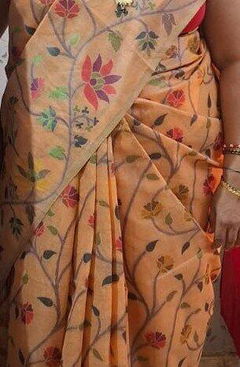
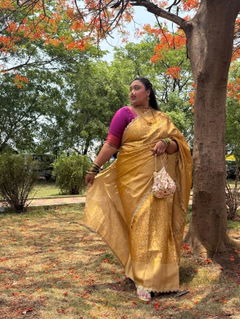
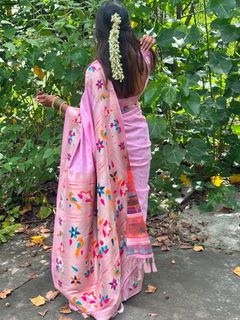
A Banarasi saree isn't just silk and thread. It's a weaving tradition that started in Varanasi centuries ago and hasn't stopped evolving since. What you see isn't embroidery or print. Every motif, every shimmer of zari is woven directly into the fabric. That's why these sarees feel different when you touch them. There's depth. There's weight. There's a reason they've been wedding staples for generations.
The craft hasn't stayed frozen in time, though. While heavy bridal pieces still exist, lighter versions have emerged for people who want the richness without the weight. At Moolchand Mill, we've built our collection around this balance: sarees that honor the tradition but don't trap you in it.
Types of Banarasi Sarees (And How They Actually Feel)
Not all Banarasi sarees drape the same way. Here's what different fabrics bring to the table:
Katan Silk
Pure silk from start to finish. Smooth surface, structured drape, the kind of fabric that photographs beautifully at weddings. It's what most people picture when they think "Banarasi."
Georgette Banarasi
Lighter, slightly textured, easier to manage if you're wearing it for hours. Good middle ground between tradition and comfort.
Tissue
Silk mixed with metallic threads. Sheer, delicate, with just enough shine. Think festive but not overpowering.
Organza
Crisp and lightweight. The zari work shows up beautifully against the fine fabric. Works for occasions that don't need full bridal intensity.
Weaving Techniques That Define the Saree
The way a Banarasi saree is woven determines everything: how it looks, how much it weighs, how long it lasts. Here are the main techniques:
Kadwa – Each motif is woven separately by hand. Clean designs, sharp edges, built to last. This is what you'll find in high-end bridal collections.
Brocade – Heavy zari creates raised patterns. The fabric has visible texture and weight.
Tanchoi – Detailed patterns using colored threads instead of heavy zari. Intricate but lighter.
Meenakari – Adds color within the zari work. Multi-toned, decorative.
Fekua (Cut Work) – Faster technique where extra threads are trimmed. Makes the saree lighter and more affordable without losing the look.
Rangkaat – Multiple colors woven together for striped or gradient effects.
Mashru – Silk blended with other fibers for a different texture while keeping visual richness.
Motifs You'll See on Banarasi Sarees
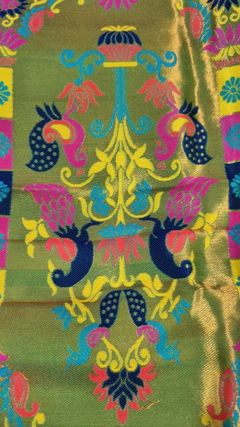
These aren't random patterns. Most motifs come from Mughal-era design influences and traditional symbolism:
- Jal – Net-like patterns covering the body of the saree
- Buta/Aam – Mango-shaped motifs (classic, you'll see this everywhere)
- Pan – Leaf-inspired designs
- Shikargah – Hunting scenes or nature-inspired detailing
- Guldasta – Floral bouquet arrangements
These are woven, not printed, which is why the designs show up on both sides of the fabric.
When Do People Actually Wear Banarasi Sarees?
Weddings – This is the big one. Brides, mothers, sisters, aunts. If it's a wedding, someone's wearing a Banarasi.
Festivals – Diwali, Durga Puja, any celebration where traditional dressing is expected.
Religious ceremonies – Temple visits, poojas, rituals where formal attire matters.
Formal events – Receptions, cultural gatherings, anywhere you need to look polished and traditional.
If you're buying a saree for a specific occasion, knowing the event helps narrow down fabric and design choices.
How to Spot a Real Banarasi Saree
Not all sarees sold as "Banarasi" actually are. Here's what to check:
Zari Work
Real zari is woven into the fabric, not glued or printed on top. Run your fingers over it. You should feel texture, not flatness. Authentic zari has a rich metallic shine without looking cheap or plasticky.
Silk Mark Certification
This certifies pure silk. If you're spending serious money on a wedding saree, this label matters.
Weaving Detail
Flip the saree over. In techniques like kadwa, the reverse side should show clean, defined patterns. If the back looks messy or loose, the weaving quality isn't there.
Fabric Feel
A genuine Banarasi has weight but isn't stiff. It should drape smoothly. If it feels synthetic or overly rigid, it's probably not pure silk.
Banarasi Saree Pricing (What You're Actually Paying For)
Prices range widely depending on what goes into the saree:
- Fabric type (pure silk vs. blends)
- Zari quality and density
- Weaving technique (kadwa costs more than cut work)
- Complexity of design
Entry-level sarees: ₹2,000 to ₹5,000 (lighter designs, simpler motifs)
Mid-range: ₹10,000 to ₹25,000 (good silk, decent zari work, suitable for most weddings)
Premium bridal pieces: ₹50,000 and up (heavy zari, intricate kadwa weaving, heirloom quality)
At Moolchand Mill, we offer options across price points. The goal isn't just variety. It's making sure quality stays consistent whether you're spending ₹5,000 or ₹50,000.
Taking Care of Your Banarasi Saree
These sarees last decades if you treat them right:
- Dry clean only – Don't risk home washing
- Store in muslin or cotton cloth – Not plastic, which traps moisture
- Keep away from direct sunlight – Prevents fading
- Refold occasionally – Stops permanent creases from forming
Proper storage keeps the silk supple and the zari intact.
Buying Banarasi Sarees Online
If you're shopping online, here's what to focus on:
- Check fabric details – Don't assume "Banarasi" means pure silk
- Look for weaving technique mentions – Kadwa, brocade, etc.
- Examine zari work in photos – Zoom in, check for texture
- Read return policies – Important when buying high-value sarees remotely
At Moolchand Mill, product pages include fabric breakdowns, weaving methods, and clear photography so you know exactly what you're getting.